

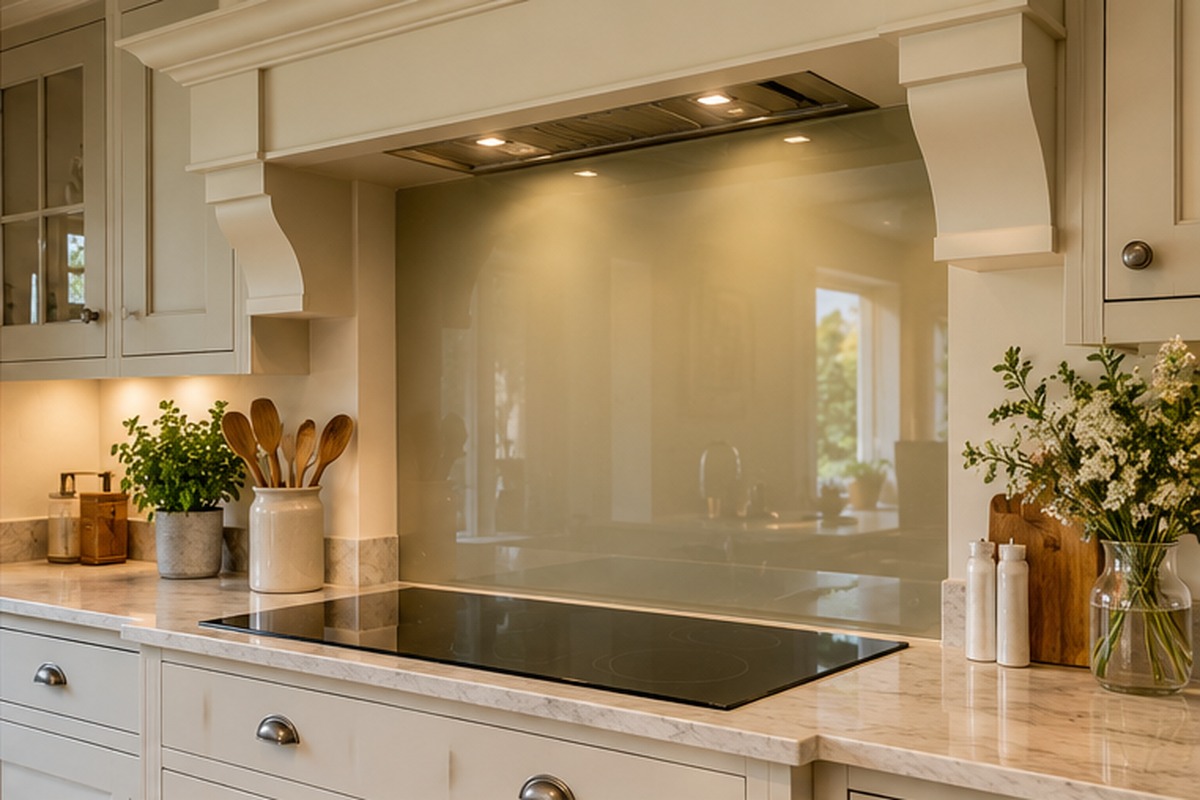
A new kitchen is a significant investment, so it’s understandable that most of the attention goes towards cabinets, worktops and appliances. Yet one of the smaller details can have a surprisingly large influence on the finished room. The wall area behind the hob and worktops needs to withstand everyday cooking activities, but it also forms an important part of the kitchen’s overall design.
Choosing the right wall protection involves more than finding an attractive colour. Homeowners need to think about materials, dimensions, cleaning requirements and how the finished surface will complement their existing fittings. Making these decisions before ordering can help avoid unnecessary expense and produce a result that looks as though it was always part of the original kitchen design.
For those considering made-to-measure glass, Direct Splashbacks offers a convenient way to order bespoke kitchen splashbacks online. With a selection of coloured, clear, mirrored and decorative finishes, customers can choose toughened glass panels manufactured to their individual measurements rather than relying entirely on standard sizes.
Start With the Kitchen Layout
Before comparing colours and finishes, it makes sense to establish exactly where the splashback will be installed.
Some kitchens only require a single panel behind the hob, while others benefit from continuous protection along the length of the worktop. There may also be separate areas around sinks, preparation spaces or breakfast bars where additional wall protection would be useful.
The layout will influence the number of panels required and their dimensions. It can also affect the overall appearance, particularly when several sections of glass need to sit alongside one another.
Electrical sockets, switches and other wall fittings deserve particular attention. If a panel needs cut-outs to accommodate these features, their positions must be established accurately before manufacturing.
This is especially important with toughened glass, which cannot be cut or drilled after the toughening process.
Taking time to understand the layout at the beginning makes the subsequent decisions much easier.
Comparing Popular Splashback Materials
There are several materials commonly used to protect kitchen walls, each with its own advantages. The most suitable option depends on the intended appearance, available budget and how the kitchen is used.
| Material | Main advantages | Points to consider |
|---|---|---|
| Toughened glass | Smooth surface, no tile grout lines, wide choice of colours and decorative finishes | Requires accurate measurements and appropriate installation |
| Ceramic tiles | Extensive choice of patterns, sizes and textures | Grout lines need regular cleaning |
| Stainless steel | Durable, heat-resistant and suited to contemporary or industrial-style kitchens | Fingerprints and watermarks can be noticeable |
| Acrylic | Lightweight, available in various colours and often straightforward to handle | Heat restrictions may limit positioning near certain hobs |
| Natural stone | Distinctive appearance, particularly alongside matching worktops | Some stone types require sealing and specialist maintenance |
For many households, glass provides an appealing balance between appearance and practicality.
Unlike tiled surfaces, which contain numerous individual joints, a single glass panel creates an uninterrupted finish. This can be particularly attractive in modern kitchens where clean lines and relatively simple detailing are preferred.
However, material choice should always take account of the cooking equipment being used and any relevant installation requirements.
Choosing a Colour That Complements the Room
Colour is often the most enjoyable part of selecting kitchen splashbacks, but it is worth considering how a particular shade will work with the surrounding surfaces.
A colour that looks attractive in isolation may have a different effect when positioned between existing cupboards and worktops.
For kitchens with white or cream cabinetry, there is considerable flexibility. Soft greys, muted greens and neutral shades can create a restrained appearance, while stronger colours introduce contrast.
Darker kitchen units may benefit from lighter splashbacks, especially in rooms where natural light is limited. Alternatively, matching dark surfaces can create a coordinated appearance when supported by suitable lighting.
Wooden cabinets and worktops often work well with warmer tones, although cooler colours can also provide an interesting contrast.
It is also worth considering the size of the installation. A bright colour covering a small area behind the hob may look attractive, but the same shade extending across several metres of wall could become more dominant than intended.
The objective should be to select a finish that complements the whole room rather than competing with its other features.
Consider the Finish, Not Just the Colour
Two splashbacks in similar colours can create very different impressions depending on their finish.
Standard coloured glass offers a smooth, contemporary appearance that works with many kitchen styles. Clear glass provides an alternative where the homeowner wants to retain the appearance of an existing decorative wall.
Mirrored finishes reflect the surrounding kitchen, making them particularly interesting in smaller rooms or spaces where additional visual depth would be welcome.
Printed designs offer greater opportunities for personalisation. Patterns, textures and decorative imagery can transform a practical wall covering into a distinctive feature.
Direct Splashbacks offers a range of these finishes, giving homeowners the opportunity to consider different visual effects before placing an order.
When choosing between them, it helps to think about whether the splashback should blend into the room or become one of its main design features.
Why Accurate Measurements Are Essential
Ordering made-to-measure kitchen splashbacks requires careful preparation. Unlike wallpaper or certain types of wall panelling, toughened glass cannot be trimmed on site if the dimensions are incorrect.
Measurements should account for the actual space available rather than assumptions based on cabinet or appliance sizes.
Walls are not always perfectly straight, particularly in older properties. Small variations in dimensions can affect how a rigid panel fits, so the relevant measuring guidance should be followed closely.
Socket positions and any required cut-outs must also be considered. The dimensions and placement of these openings need to be specified correctly during the ordering process.
For longer installations, it may be necessary to use more than one panel. The positioning of joints should be planned so that the finished result looks balanced.
Direct Splashbacks provides measuring guidance for customers ordering bespoke glass, helping them understand the information needed before manufacturing begins.
Anyone uncertain about their measurements should resolve those questions before confirming an order. Careful preparation is generally much easier than dealing with a panel that doesn’t fit.
Think About Everyday Cleaning
Appearance matters, but kitchens are working spaces. Cooking oils, steam, sauces and food residue regularly come into contact with the surfaces surrounding a hob.
This makes cleaning requirements an important consideration.
Glass is particularly convenient because it has a smooth, non-porous surface. Everyday marks can generally be removed with a soft cloth and a suitable cleaning product.
There are also no tile grout lines running across the panel, removing one of the areas where grease and dirt can accumulate.
This makes glass kitchen splashbacks an attractive option for busy households that want an appealing finish without complicated maintenance.
However, the choice of finish may influence how visible certain marks appear. Highly reflective surfaces, for example, can show fingerprints and watermarks more readily than some other finishes.
Homeowners should therefore consider both the initial appearance and how the material will look during everyday use.
Check Suitability Around Cooking Appliances
Not every splashback material is appropriate for every position in the kitchen.
The area directly behind a hob can experience considerable heat, especially during prolonged cooking. It is important to select materials designed for the intended environment and to follow the appliance manufacturer’s installation instructions.
Toughened glass is stronger and more resistant to thermal stress than ordinary glass, making it suitable for many kitchen applications.
Nevertheless, the positioning of the panel, the type of hob and any required clearances must still be considered.
Direct Splashbacks manufactures its glass products using toughened glass, offering an alternative to materials that may have more restrictive heat limitations.
Checking these practical details before ordering can prevent problems later and help ensure the finished installation is appropriate for the kitchen.
Understanding the Cost of Made-to-Measure Glass
When budgeting for a kitchen improvement, the initial price of the material is only one consideration.
Homeowners may also need to account for installation, preparation of the existing wall and any specialist requirements such as socket cut-outs.
The dimensions and chosen finish can influence the cost of bespoke glass, so obtaining an accurate quotation is useful before making a final decision.
Direct Splashbacks allows customers to configure their chosen product and obtain an instant quotation online. This makes it easier to explore the available options and assess the likely cost of a particular installation.
The company also offers free tracked delivery across mainland UK, removing a potential additional expense from the purchasing process.
For homeowners comparing different kitchen splashbacks, having a clear understanding of the total project cost can make it easier to choose a suitable product without exceeding the available budget.
Ordering With Confidence
Once the material, finish and measurements have been established, the ordering process should be relatively straightforward.
Before confirming a purchase, customers should check their measurements, review any cut-out requirements and ensure they have selected the intended colour or decorative finish.
It is also worth reading the supplier’s measuring and installation information, particularly when ordering made-to-measure glass for the first time.
Direct Splashbacks provides online ordering alongside guidance intended to help customers prepare their requirements. This can be useful for homeowners who prefer to organise improvements themselves rather than relying on a traditional showroom.
Installation should be approached with the same care as ordering. The wall needs to be suitable for the chosen fixing method, and any relevant preparation should be completed before the glass is positioned.
Where there is uncertainty about handling large panels or achieving a suitable installation, employing an experienced tradesperson may be the sensible option.
Making the Final Decision
The best splashback is not necessarily the most colourful, expensive or elaborate option. It is the one that works with the kitchen’s layout, complements the surrounding fittings and meets the practical demands of everyday use.
For some households, a simple neutral panel will provide exactly the appearance they want. Others may prefer a mirrored finish, a stronger colour or a decorative design that becomes a focal point.
Whatever the preference, taking time to consider measurements, materials, maintenance and installation requirements can make a significant difference to the finished result.
With made-to-measure manufacturing and a choice of decorative finishes, Direct Splashbacks offers homeowners a practical route to improving their kitchens. Carefully selected kitchen splashbacks can protect the surrounding walls while contributing to a more attractive, coordinated and enjoyable space.
Get in Touch:
Direct Splashbacks
United Kingdom
[email protected]
directsplashbacks.com