

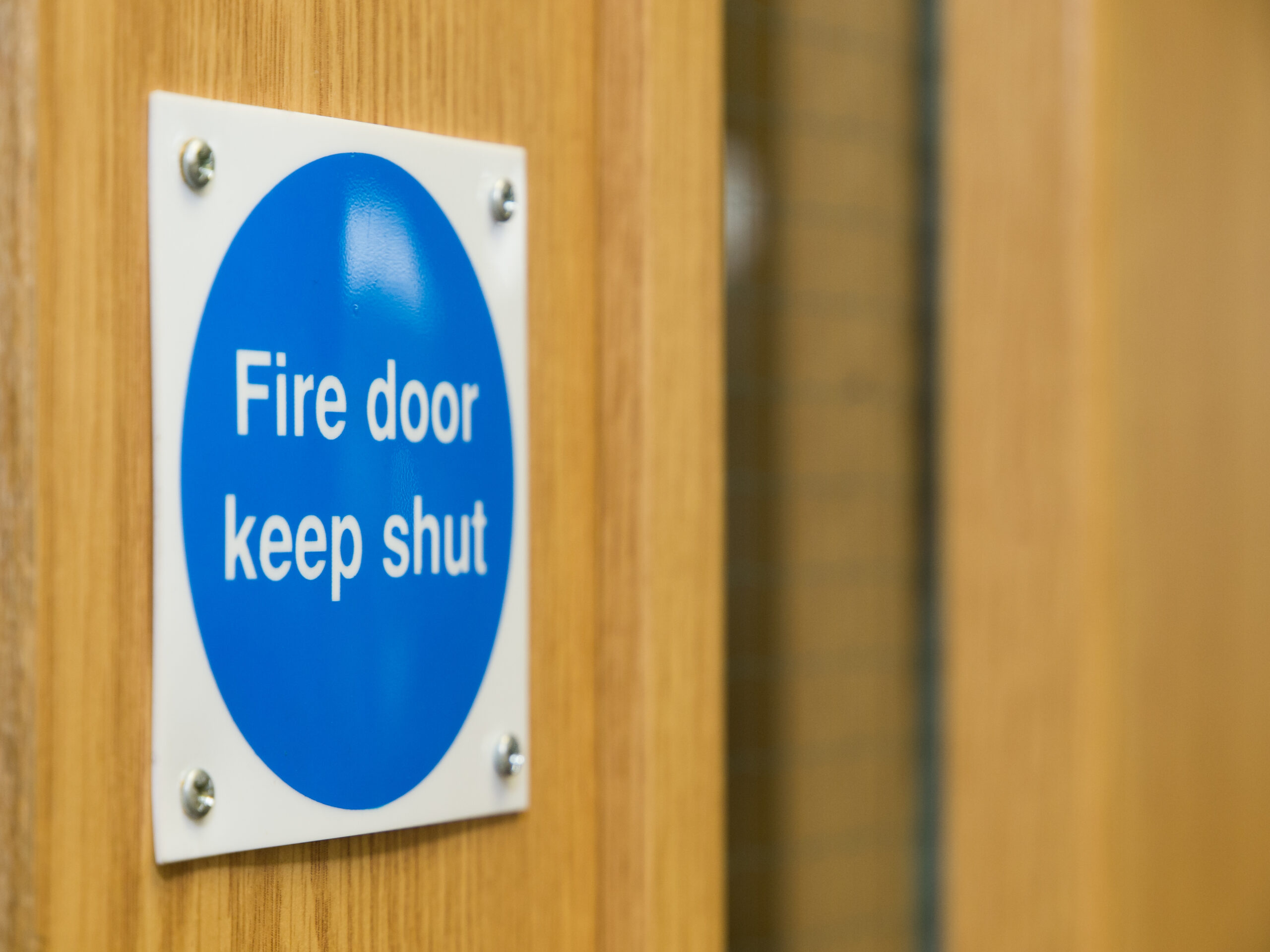
Fire door compliance is one of the most misunderstood areas of landlord responsibility in the UK. Many landlords know they need fire doors in certain properties — but far fewer understand what “compliant” actually means in practice, or how often properly installed fire doors become non-compliant through wear, damage, or the fitting of incorrect hardware.
Who needs fire doors?
Fire doors are a legal requirement in Houses in Multiple Occupation (HMOs), purpose-built blocks of flats, and any building where a fire risk assessment identifies them as necessary. The Regulatory Reform (Fire Safety) Order 2005 places responsibility on the “responsible person” — usually the landlord or managing agent — to ensure fire safety measures are in place and maintained.
For landlords of converted houses split into flats, the requirement is often misunderstood. If there are communal areas — a shared hallway or staircase — fire doors are almost certainly required on the doors leading from each flat into those communal spaces.
What makes a fire door compliant?
A fire door isn’t just a thicker door. A compliant fire door assembly consists of several components that must all work together correctly:
The door itself must be a certified fire door — typically rated FD30 (30-minute fire resistance) or FD60 (60 minutes). The frame, hinges, intumescent strips, smoke seals, and any glazing must also be fire-rated. And critically, the door must close completely and latch every single time, without being propped open or failing to reach the frame.
This last point is where most fire door failures occur in practice. A fire door that doesn’t self-close properly — because the door closer has worn out, been removed, or was incorrectly specified — is not a compliant fire door, regardless of the quality of the door itself.
The door closer problem
Door closers are the most frequently failing component of a fire door assembly. They have a mechanical lifespan and are subject to significant daily wear in properties with multiple occupants. A leaking hydraulic closer, a bent arm, or a closer that’s simply lost its tension will result in a fire door that doesn’t reliably latch.
Brands like Briton, which has been manufacturing door control hardware in the UK for over 100 years, produce door closers rated to EN 1154 — the European standard for controlled door closing devices. A Briton door closer fitted by a qualified locksmith and maintained regularly is a reliable solution for landlords who need compliant fire door assemblies.
Inspection and maintenance
The Fire Safety (England) Regulations 2022 introduced new requirements for multi-occupied residential buildings. In buildings over 11 metres in height, landlords must carry out quarterly checks of all fire doors in communal areas and annual checks of flat entrance doors. Residents must be given information about their fire doors and asked to report damage or defects.
Even for lower-rise buildings not covered by these specific regulations, regular inspection of fire doors is best practice — and will be expected as part of any fire risk assessment.
What to check: the door closes fully and latches without manual assistance; intumescent strips and smoke seals are undamaged; hinges are secure and not worn; the door closer is functioning correctly; there are no visible gaps around the frame when the door is closed.
What landlords should do now
If you manage any property with communal areas or an HMO licence, a fire risk assessment is a legal requirement. If that assessment hasn’t been done recently — or if you’ve had works carried out that might have affected fire doors — it should be your next step.
Where fire door hardware needs replacing, use a qualified locksmith familiar with commercial door control hardware and the relevant standards. Fitting a non-compliant closer or incorrect hardware can invalidate the fire door’s certification entirely.
Fire door compliance isn’t a one-time exercise. It’s an ongoing maintenance responsibility — and one that comes with serious legal consequences if it falls short when it matters.